On Kai’s wonky eye

By | #teammikaere | No Comments

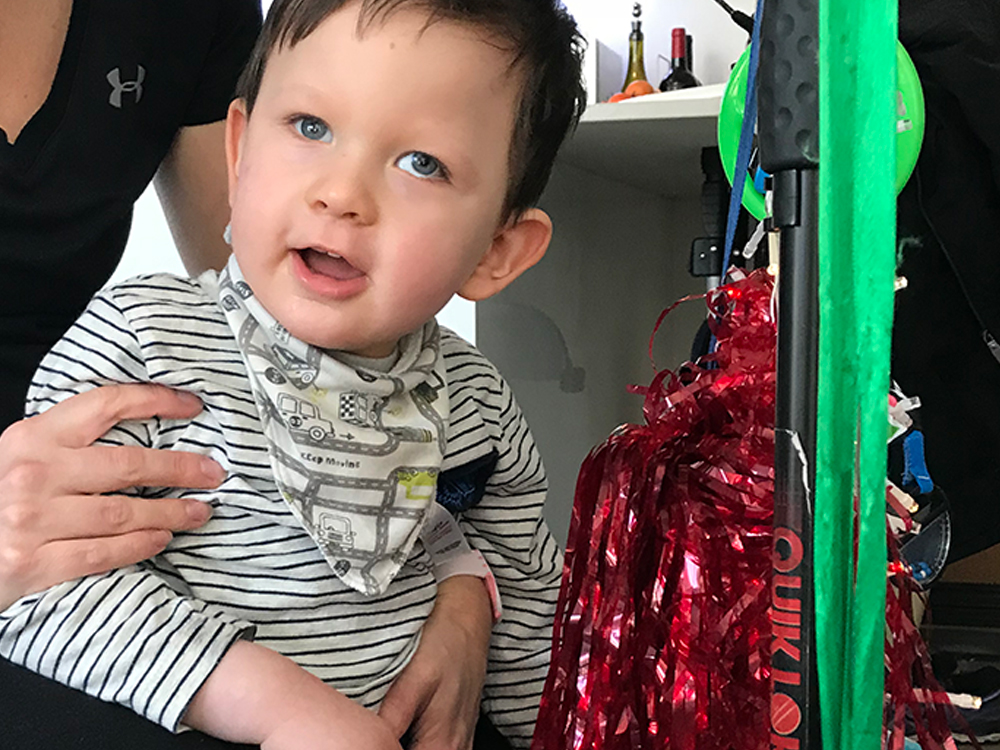
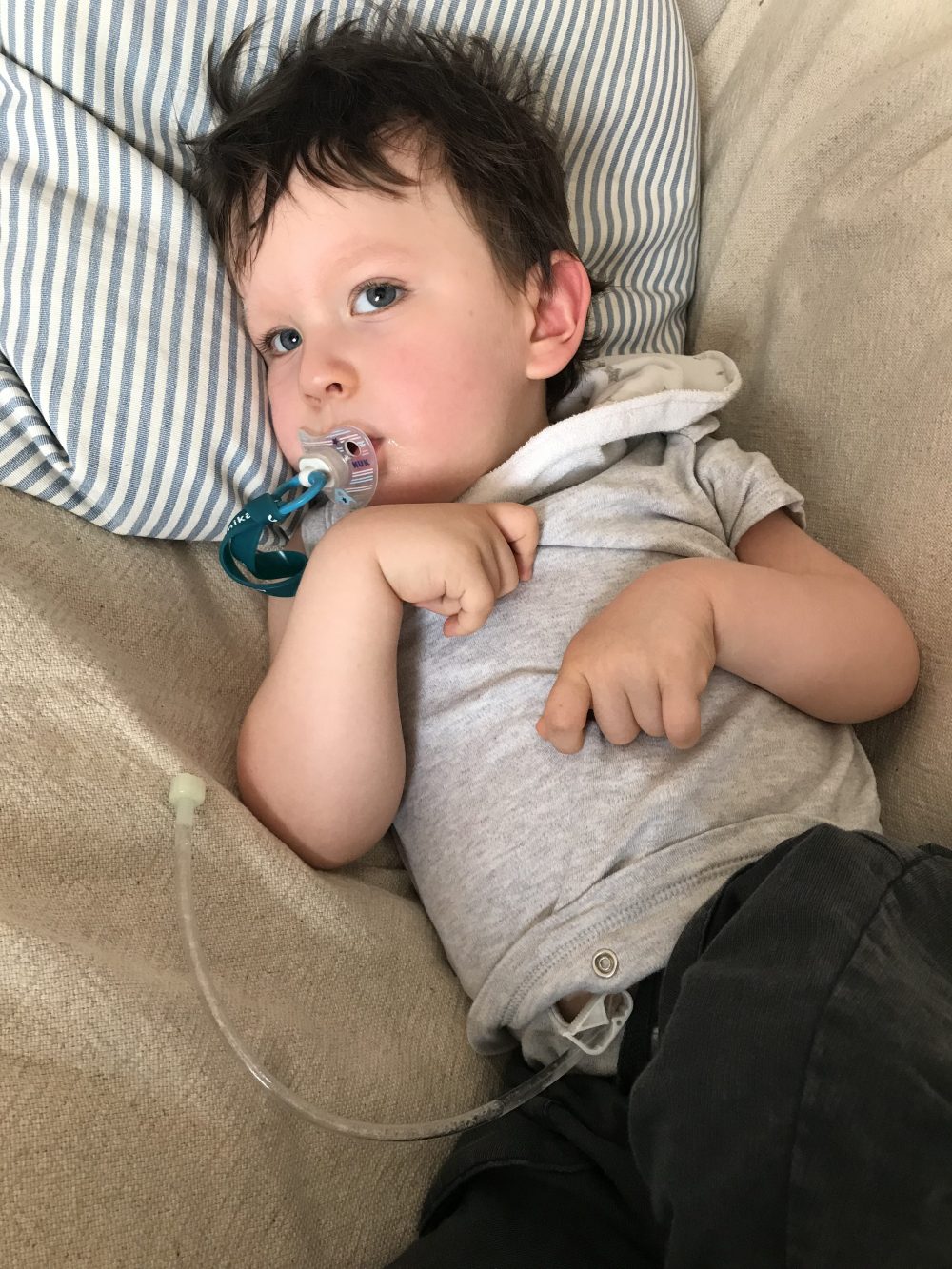
Mikaere has a wonky eye. It’s not called a wonky eye, it’s called intermittent left hypertropia with exotropia. Big words, but essentially means that Mikaere isn’t always able to align his eyes in the same direction. It would be but like going cross-eyed, but only one eye (his left), not both.

Hypertropia means it floats up (instead of staying in the middle) and exotropia means it floats out (the opposite of going cross eyed).

There isn’t much that can be done to fix it. Surgery (which we won’t consider). There is a study happening on patching, but there isn’t enough evidence that it would help for me to want to put Mikaere through that (Quality of Life is always front and centre of any treatment plan).

Apparently it shouldn’t effect his vision too much, and is a side effect of NKH. What’s more it’s not all the time, mostly when he’s tired or stressed. If it is bothering him, he’ll stop for a moment, still himself and close his eyes. When he opens them sometimes his eyes reset themselves and orientate in the same direction.

The trickiest thing for me is the stares when we’re out and about. Being in the supermarket and a kid asks ‘what’s wrong with that babies eyes?’ before being pulled away by their parents. (Sidenote: please don’t do that. Encourage your kids to ask questions. Please just politely ask instead of making something up or shushing your kid).

As a side note, it turns out Mikaere is ever so slightly (3 dioptres) far sighted! I get the impression this is a common NKH symptom, and easily fixed with glasses. However, I don’t necessarily feel would improve Kai’s quality of life enough to warrant fighting with him to keep glasses on his face, and our opthomologist didn’t feel strongly, so we passed. It has helped us though, when we hold things for him to see, we start from far away and move it forward until he focuses on the object. Even just having the knowledge that he’s ever so slightly farsighted has changed the way we interact with him.

The other thing is that he’s got less farsighted as he gets older, and we’ve also noticed that his eyes are less wonky. (By that I mean, the frequency of his wonky eye periods are less the more well he is, and they increase when he’s poorly or tired).

Hey ho. I think it’s just ‘another thing’ we manage hey. Rare metabolic disorders and wonky eyes. Onwards we go!


On QRI Laser Therapy for Reflex Integration

By | #teammikaere | No Comments

One of the things we fundraised for was for Low Level Laser Therapy (LLLT) When I first heard about QRI from a few NKH Mums – I raised my eyebrows and thought ‘hogwash’.  Three months later I was on a train to Birmingham without my guys to learn how to do it. It is a bit… alternative. Very woo-woo. The website is very 90s and the copy on the website is very… holistic and intuitive. For someone who prefers decisive facts and firm science, it was a big leap to get to the point where I was okay to try it on my child.

Now before I get to the point where I’ve joined all the dots – here’s the thing: if there is no harm and there is possible benefits, I’m keen to try it. If it will help Mikaere and it definitely won’t hurt Mikaere, then the risk for trying is low. So we try it. That’s where I started – the possible benefit for Mikaere and his health was 100% greater than the possible risk (because other than time and cost, there is no risk. It’s just light).

So I went on faith. And lots of anecdotal kool aid success stories from other special needs parents.

I got on a train, paid several hundred US dollars and went to learn about a protocol that suggested that with lasers, I might be able to help my son hold up his head.

Here’s how it works. There are a few premises, so let’s start with those.

  1. The first premise is that cells in our body can take up energy from light. It’s called photobiomodulation. Essentially, there’s a step in the process that makes ATP that has a copper middle. Copper can absorb light in certain wavelengths to give it an ‘energy boost’.The Science, as I understand it: Each cell in our body has a little power factory, called mitochondria. It creates ATP, which is what powers every function in every cell in our body. Cytochrome C Oxidase (CCO) is a step in the mitochondrial electron transport chain – the part that helps make ATP.  It transfers one electron (from each of the four cytochrome c molecules), to a single oxygen molecule, producing two molecules of water. At the same time, four protons are moved across the mitochondrial membrane, producing a proton gradient that the ATP synthase enzyme needs to synthesize ATP. CCO has two heme centres and two copper centres. Each of these metal centres can exist in an oxidized or a reduced state, and these have different absorption spectra, meaning CCO can absorb light well into the NIR region (up to 950 nm). Which is to say wavelengths in the red (600–700 nm) and near-infrared (NIR, 770–1200 nm) spectral regions, can be absorbed by the CCO centres, which causes an increase in mitochondrial membrane potential (MMP) above normal baseline levels (increasing the amount of ATP made) and leads to a brief and rather modest increase in generation of reactive oxygen species (ROS) – which is a number of reactive molecules and free radicals derived from molecular oxygen. It’s used in a cell signalling and cell cycling.In a nutshell – given the right wavelengths of light, the mitochondria of a cell can absorb the photons from the laser, which stimulates the cell – increasing the ATP made and improving the signals between cells (amongst other things).
  2. The second premise is about reflexes.  We all have reflexes and they can be retained, preventing development. We all have a number of reflexes designed to help our bodies move through developmental phases. Reflex’s are held in what is called the Reflex Arc – it’s a neural pathway that controls a reflex. Most sensory neurones do not pass directly through the brain, but instead through the spinal cord. This allows for faster reflex actions to occur by activating spinal motor neurones without the delay of routing signals through the brain. When babies grow, the reflex triggers a certain number of movements automatically. These movements pave a set of neural pathways that, eventually, will allow the reflex to be integrated. Once a reflex is integrated, it’s no longer needed and the body will no longer use the reflex.Here’s the important bit: if there is an issue in the brain, or in the central nervous system (like, say because you have Nonketotic Hyperglycinemia) – these reflexes may not be integrated correctly or at all. They might be retained. If a reflex is retained, the child will not easily be able to progress. If they do progress, they’ll need to compensate for the retained reflex.
  3. The third premise is for reflexes that aren’t integrated can be integrated. Or rather, helped along. If reflexes are typically integrated with repeated movement, repeated, rhythmic movement (or, say, cell stimulation in particular points) may be able to help integrated reflexes by forming neuropathways. Even in brains with neural damage, on the idea that our brains have a certain amount of neuroplasticity, and if possible, they will find a way. This is where things get a bit more… flexible. But, I’m willing to give it a go. Especially because there are so many different success stories from other parents.

And so I went to a workshop held in Birmingham, and I had my first experience of laser therapy.

Woah. Buddy.

I sat through the entire half of the first morning and was so annoyed at myself. I was definitely wasting my time and I’d wasted so much money and I was very very very glad I had not spent thousands of pounds on a laser. The content was way to woo-woo. So far removed from science, and so far removed from what I knew and expected. I half listened, and tried to figure out if I could get a refund on my hotel and a train ticket back to London.

Then the ‘interactive’ part of the session happened. Where you test the reflexes of your partner, do the protocol, and then retest. I was positive I’d feel nothing (it’s just LED lights, I told myself) and that nothing would change.

Here’s the thing. I lay down, and almost instantly the lasers made my body relax even when my brain was still going a million miles an hour. What the heck. I’d never been in a situation where my body was calm and relaxed and my mind was not (it felt very very odd). You could feel your body responding to the lasers, so I kind of relaxed into it. Something was definitely happening, and there must be science behind it. I was sure. I was even more surprised when my reflexes had changed rather dramatically in the test afterwards – profoundly different from the before test.

It’s possible that it was psychoshamtic, but it’s also possible the laser was effective. Hard to know. So I stayed on, and that first night I went on an epic research deep dive. Here’s a small snippet of what I found.

  • LED study on that showed significant improvements in executive function and verbal memory of Chronic/Traumatic brain injury patients after LED/near infra-red light therapy. (Source)
  • LLLT decreased the muscle spasticity of children with spastic Cerebral Palsy (Source)
  • LLLT/photobiomodulation – cells exposed to low-levels of red and near-IR light from lasers or LEDs either stimulate or (less likely) inhibit cellular function, leading to reduction of cell and tissue death, improved wound healing, increasing repair of damage to soft tissue, nerves, bone, and cartilage, and relief for both acute and chronic pain and inflammation. (Source –  okay, so not a study, but I got half way through the references before I decided it was probably the most succinct version about LLLT)
  • Applying near-infrared light to the head of animals that have suffered traumatic brain injuries produces improvement in neurological functioning, reduces neuroinflammation, and stimulates the formation of new neurones (Source)
  • The rats subjected to 500 mW of laser irradiation had a significant decrease in glutamate, aspartate, and taurine in the cortex, and a significant decrease in hippocampal GABA (Source -this one’s helpful, because if there is a decrease in glutamate, the NMDA receptors which glycine binds to are less likely to fire)

They’re mostly the abstracts, because I don’t think I’m allowed to share openly the full studies, but there you go.

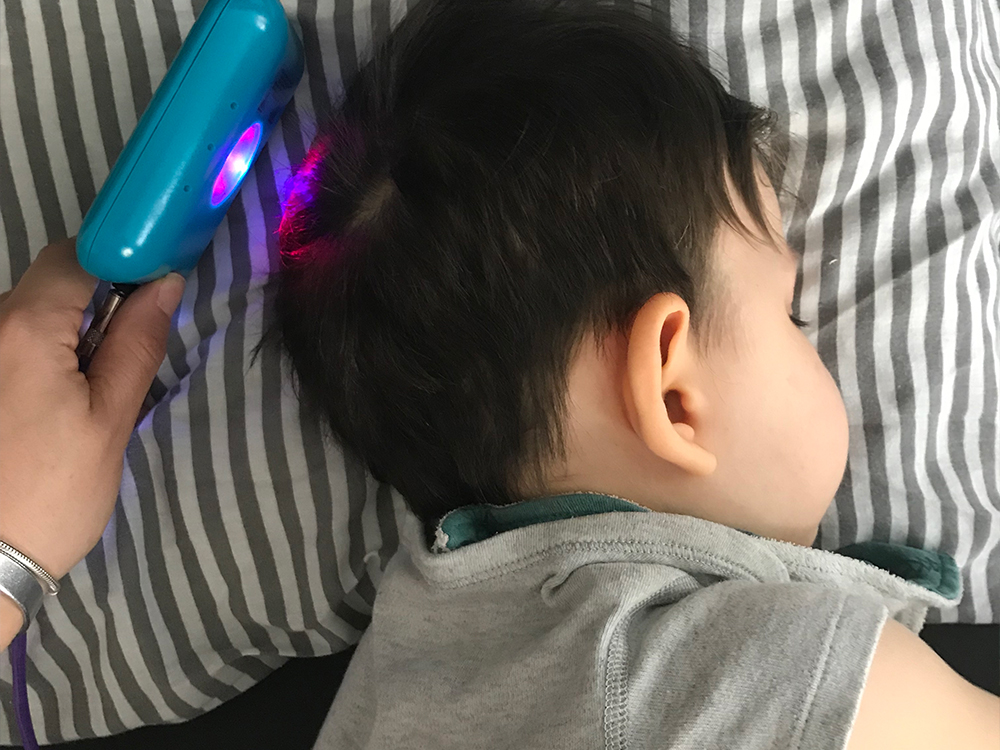
We got a laser and we’ve been working it into Mikaere’s routine. Sometimes we manage it, sometimes we don’t. We think we’ve seen some gains, but because we’re doing so much with Mikaere it’s hard to attribute it directly to the laser. We’ll see. I’ll keep you posted.

 

On falling out of the red chair

By | #teammikaere | No Comments

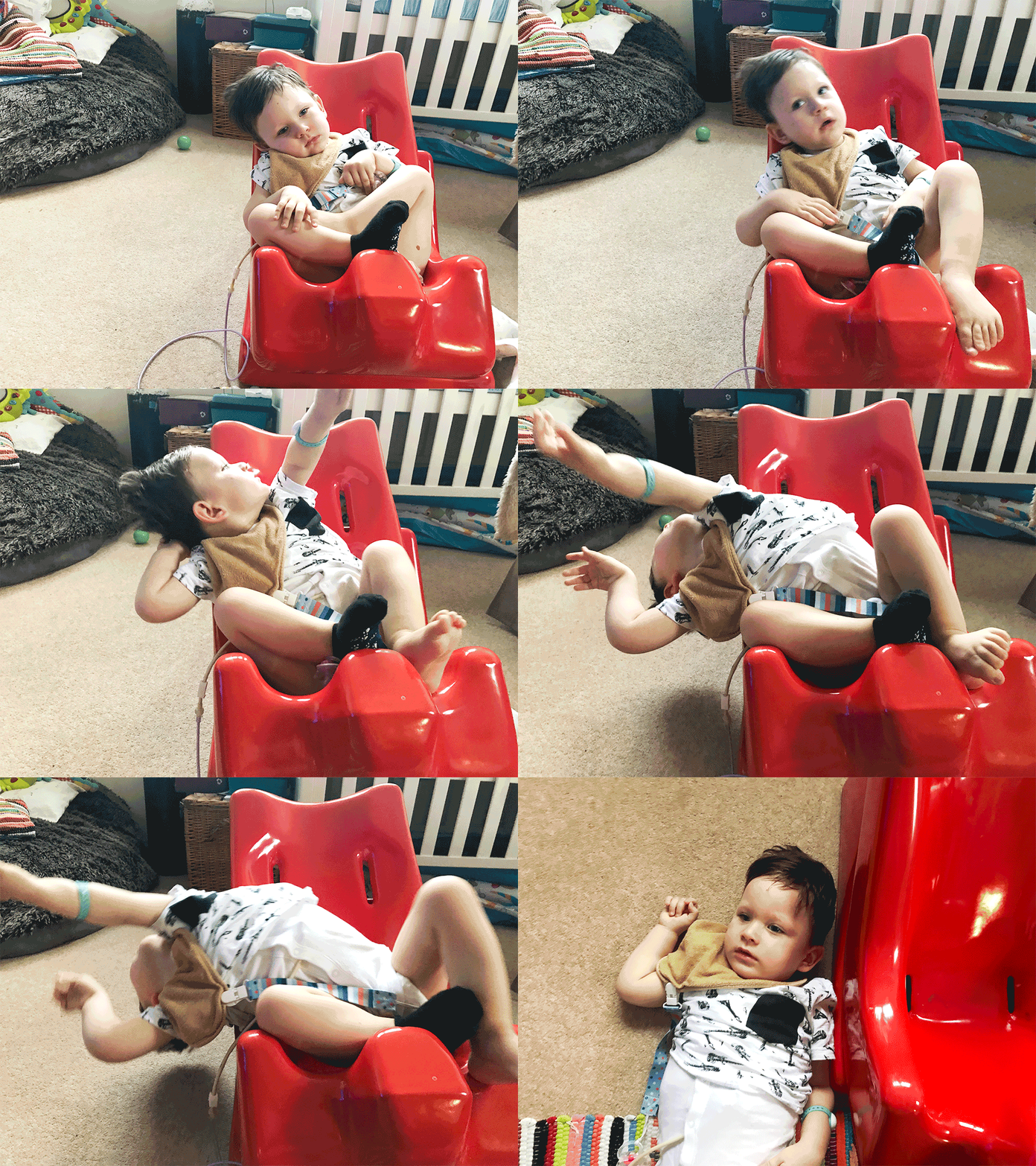
Mikaere has a red tumble form that we use a million times a day. It’s portable, he fits in it and it’s convenient for eating (as he needs to up upright while on feeds). He can wriggle and kick and bat things in it, he’s not strapped down, he’s not confined.

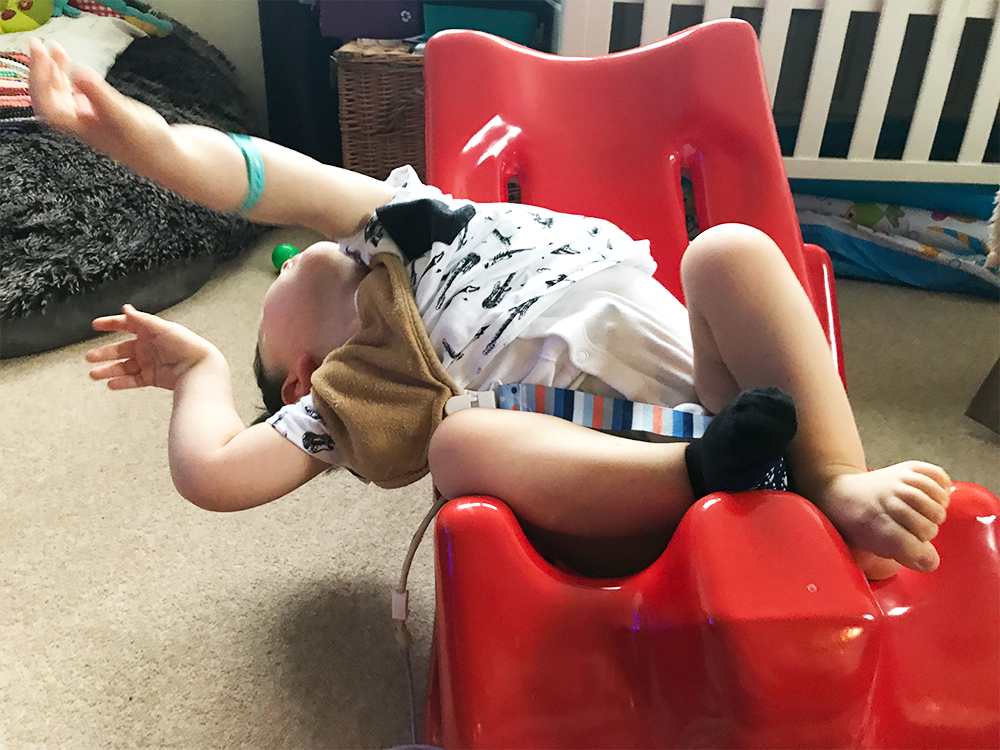
Except maybe he SHOULD be. Kai has learnt how to fall out of his chair. It’s a very slow motion kind if thing, it takes several minutes for him to topple over the side, moving his arms and shifting his weight until his top half is heavier than his bottom half holding him in the seat.

Sure enough, he’ll go over the side (we’ve only let him do it a handful of times, usually you can see it coming a mile off and reposition). The first time he screamed. The second time he was a bit bewildered. And third was definitely intentional and had a big grin.

It’s hilarious. And I’m glad he’s making choices for himself about where he wants to be.

Update: We’ve had to strap him in now, as it’s getting a bit dangerous. The chair is no longer a safe space to be unstrapped!

On Portage and Shaving foam

By | #teammikaere | No Comments

We’re on the portage service, which is basically play therapy. Our lovely therapist Jackie comes to visit and brings a bag very much like Mary Poppins carpet bag of amazing. There are always interesting wonders in her bag.

A few weeks ago she bought by shaving foam. We’d been struggling to keep Mikaere entertained. While I’m struggling, anything that requires spontaneity or effort is tricky. Well, enter Jackie and her magic shaving foam, and Kai went to TOWN.

I wouldn’t have thought about shaving foam before. I’m not adverse to messy play, but it’s hard to get out of your bubble and find things that would work for Mikaere that he’d enjoy. Shaving foam was definitely a treat and it went EVERYWHERE. It was hilarious, and amazing and we all had a great time.

Thank goodness for play therapists, hey?

On the pink dummy

By | #teammikaere | No Comments

Mikaere still uses a dummy, he finds huge huge comfort in it. He’s even able to ‘ask’ for it by making a sucking noise. At this point, if this is the one thing he can ask for and something he finds comfort in, he can have one as long as he wants it. We’re working on hand co-ordination so he can push it back in if it’s falling out (OT loves the dummy motivation, for sure. We practise putting the dummy in a million, billion times a day).

We use NUK dummies, which conveniently come in several sizes. I ordered some from amazon (using Amazon Smile for Joseph’s Goal). Some cute, gender neutral ones.

However what came back were some cute pink chickens. I attempted to return the said pink ones, but amazon said keep them, and we’ll send out the right ones. Okay, that’s cool. Except the new ones weren’t gender neutral either. It was more pink chickens.

At that point I figure fuck it. No one cares if Mikaere is using a pink dummy, and now we have four of them. Pink dummies, just as good as the gender neutral ones it turns out. Gender stereotypes can suck it.

On Special Feeding Onsies

By | #teammikaere | No Comments

It seems like a weird thing to follow up with after that last post, but I want to talk about clothes for a minute. Kai spends 90% of his time on his back. You spend most of your time upright. Clothes, generally are designed for upright wear.

When Kai wears a tshirt, or a jumper it slides up and exposes his button. The danger with this is giving him easy access increases the chances of him pulling out his button (not ideal). So he wears onsies which have poppers at the bottom, so they can’t ride up. But most onsies for kids don’t have belly access. Which means we typically have to undress him to feed him, and have the feeding extension come out of his pant leg (not ideal).

So we buy special feeding-friendly onsies. The ones we get from M&S are £6 a pop. It frustrates me that for the same price you can get a bulk pack of onsies with no button access. It frustrates me that M&S sell clothing for disabled kids, but won’t put a changing places facility (a safe disabled toilet for those that can’t self transfer) in their stores (but neurotypical people – hey, they’ve got a whole bunch of toilets for you. Wouldn’t you be mad if a store like M&S wouldn’t provide something as basic as toilets?)

It frustrates me that we have to source fancy feeding tube friendly clothes for my son. I can’t just go into the nearest store and pick something cute up. It’s never that easy. And because there is such a huge demand for feeding tube friendly clothes, so many places are out of stock. No kidding, last time I found a place that has onsies in stock I bought several in the two sizes up, just to avoid the stress of it.

This is just another thing to think about, another added difficulty. Sad face.

Special needs Mum – share with me your favourite feeding tube friendly clothes places. Help me find the good stuff.

Update: I saw a post from another NKH Mum who shared BUTTON HOLES as a tip! If I can figure out how to put button holes in Kai’s onsies, I won’t need to buy ridiculously expensive onsies!

I’m still pondering grief

By | #teammikaere | No Comments

Death is natural. It’s as natural as living. We all die, we all know someone whose died and we all will die. One day. I’m mulling over death, and grief. Forever and always, I think. Is our grief compounded because we don’t live in villages anymore, and we don’t see death in our day to day? We hide away death, we have a funeral that lasts no time at all, we eat little sandwiches and say “I’m so sorry for your loss”. And then we grieve in private, smushing down those feelings we have as we try push through as if we’re fine? Untouched?

I wondered if people who work in funeral homes, doctors in the special care units, nurses in hospice, who deal with death on a regular basis have a healthier grief management system. Do they have a healthier emotional grieving process because they’re exposed to so much more grief? (I asked… I don’t think they do. The several people I asked said it was hard, but it wasn’t their personal pain. Plus they felt like they were helping people, making a difference. I guess having a virtuous purpose relieves some of that emotional weight).

As you can see I’m trying desperately to wrap my head and heart around death, considering we’re surrounded by it. Death is happening frequently to kids we know and love.

If death is natural, why do we fight feeling grief? Do I need to fight grief? Do I feel more grief, considering it’s children who are dying? Children we work so intensely hard to keep alive? If they lived longer, would I feel as hard done by? If they lived fuller lives, if they were less disabled? As horrid as it is, when an adult is sick, or has passed in my head I think, as an adult they had the opportunity to live. They traveled or loved or did whatever it is they wanted to do – they lived. They had time, they had years to fill with life. Our kids don’t have the same opportunities.

Is living and loving and having years and years before you die more natural? I think we have the expectation that that’s the order of how things are meant to go. Does that make it more natural though?

It hard to come to peace with loss. Loss is unavoidable, we’re attached to people and things and outcomes and expectations. I feel like grief is the weighted opposite of love. That the love that I have directly influences the grief I have… but if love is a natural as breathing and we feel such deep depths of love for our children, is grief natural too?

My question, I guess, is how do I survive this? How do I protect my heart from all the grief? How do I do that while still being open and part of the NKH community, while still loving all those other little terminal children? And if I’m open, if I’m vulnerable, how do I survive all the losses? The losses that keep coming?

I don’t have answers. I’m feeling what I’m feeling. I’m struggling, hey. The grief, it’s a real thing. Holding my boy a bit tighter today.

On our Seatbelt Medical Alerts

By | #teammikaere | No Comments

I’ve talked about medical alert car stickers a while back, for alerting emergency response if there was ever an accident that Mikaere was non-mobile, non-verbal and an epileptic. It says in red Nonketotic Hyperglycinemia, so they can’t miss it. It also says Glycine Encephalopathy so they don’t confuse it with Nonketotic Hyperglycaemia, because you know someone’s in a rush that’s what they’ll read and if I’m not there to advocate for my baby you can bet they’ll test his blood sugars unnecessarily.

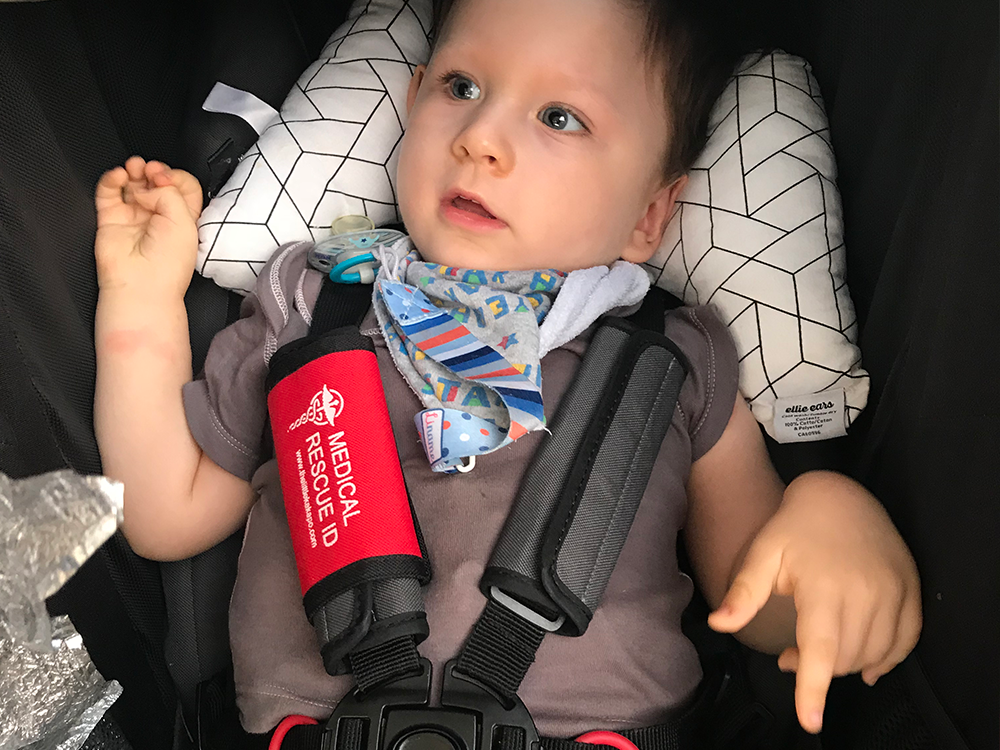
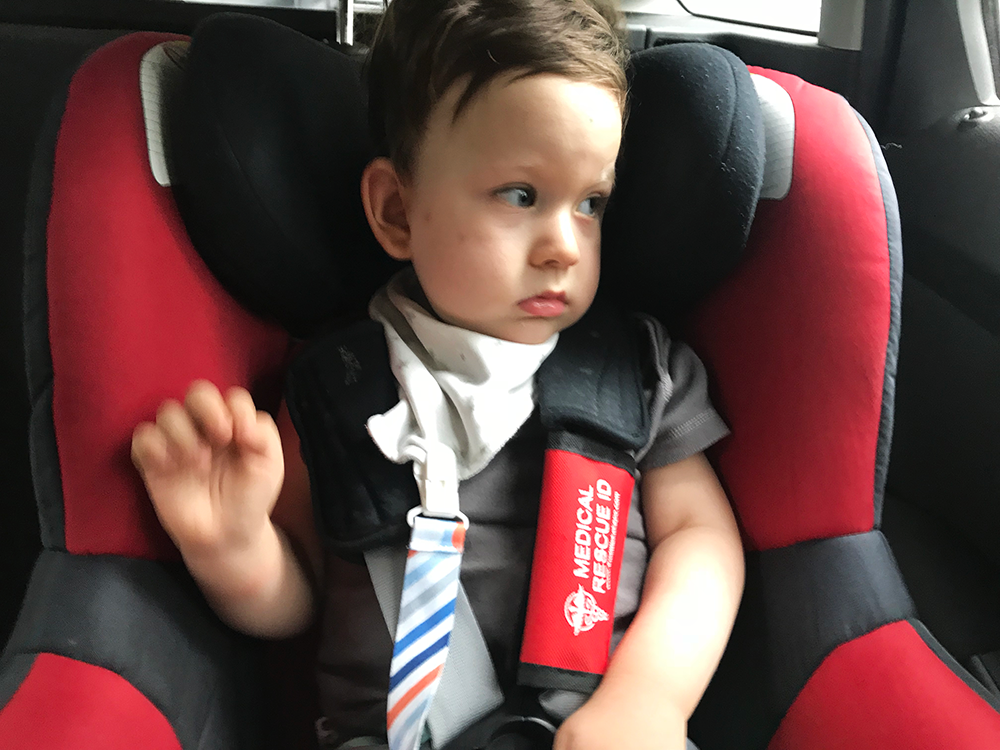
Anyway, what I wanted to say is that I found these medical alert seatbelt straps, for both the buggy and the car seat. They live on the straps, so we don’t need to remember them. Inside there is a little card with our details, the basics of his diagnosis AND a link to his medical care plan (essentially our cheat sheet).

It’s such a huge thing, my fear about not being able to advocate for Mikaere. About all those what if scenarios. I feel like we live in that space where all the unlikely things happen (a weird kind of luck?) and I want to give him the best shot I can.

So, seatbelt medical alerts. He’s got one on his car seat, and one on his buggy. A simple easy thing we’ve done to help stave off the worst case. Worth it, hey?

The place we got ours no longer sells them (womp!) but there are other places like here or here.


The Cheatsheet

By | #teammikaere | No Comments

We have a cheatsheet for Mikaere. It goes everywhere we do, and is the first thing that’s handed over to nurses at A&E visits or admissions, doctors at appointments or any new therapist we have.

It’s literally a combination of every single question we’ve ever been asked, all the details people want to know, or didn’t know they should know. The nurses love it and the registrars love it too. Our consultants love it because it means we don’t have to go through the medical list and doses one by one. They can take the cheatsheet away, and we can use the appointment time more effectively.

It also means when someone asks something stupid, I know they haven’t taken the time to read the cheat sheet and I redirect them. It saves time. Theirs and mine and means I don’t have to fight to make myself understood, or worry that I’ve forgotten anything.

It’s also been helpful in other ways. The main being it signals that I’m a competent parent. That I know my child, I know his disorder, that I’m familiar with the medicalised setting and establishes that I’m an authority on my child.

It means that when it comes time to discuss an action plan, I’m included in the discussion as it’s taking place, not being told what’s going to happen after. It means when I disagree, I’m listened to, and my concerns are heeded. I can’t tell you how many times we’ve avoided being admitted because the cheatsheet gave me credibility when I’ve said no to admission.

The cheat sheet has just made our lives easier. For those that are interested, I’ve created a template here on google drive.

It’s the small things, hey? Cheatsheets. They make a difference.

On Stat monitors and o2 levels

By | #teammikaere | No Comments

There are two little red numbers on the stat monitor, and I’m staring at them, willing them to go up. 92. 92. 92. 92.

92 is too low. I know the guidelines. He’s got to stay above 94 on 1L or less. I check the tank (is oxygen even coming out of this thing? Is there even any oxygen in there? But the needles on green, when I pull out the tube and crank it up I can hear the o2 rush out).

92. 92. Maybe he just needs a minute. I’ve put him down and he’s just fallen asleep. Asleep is when we need to pay attention, when he’s not moving about or working as hard. 92. 92. 92. 92.

Is the stat monitor probe even on correctly? I peel back the blanket to look at Kai’s chubby toes. He’s still, and the little red light is steady and exactly where I left it. It’s not the monitor. 92. 92.

I put the blanket back and reposition the mask slightly, bothering Mikaere in his sleep.

92. 92. 92.

Do I call our nurses? Not yet. I already know they’ll say if he can’t stay about 94 we have to go back into hospital. I don’t want to go onto the ward. I will, if I have to, but I don’t want to. He’ll catch something else there for sure, and I don’t fancy living in a half metre gap along side his hospital bed, sleeping on a plastic armchair that folds flat. With no sleep for anyone, gross showers and shitty food. No thanks.

92. 92….

Do I crank up the o2? Just to see if 1L isn’t enough?

Just as I reach over to the tank, the light flicks to 93. 94. 95. 96.

The relief is overwhelming. It’s not 92. He just needed a minute. I’m on edge, and have been the last few days. He’s back into the safe zone. I feel like I can breathe again.

We’re not in hospital yet, hey? Thank fuck for that.